ROOFING BUYING GUIDE
Underlayment for a Metal Roof: Five Checks Before You Order
A practical buyer checklist for matching roof underlayment to a metal panel system, its temperature conditions, attachment method, and written installation requirements.
A roll labeled “synthetic underlayment” is not automatically the right choice beneath every metal roof. The panel material, roof assembly, temperature exposure, attachment method, and the panel maker’s written requirements all matter. If you distribute roofing materials, collecting those details before you quote helps prevent a substitution that cannot be used on the job.
The National Roofing Contractors Association notes that high-temperature-rated underlayment is preferable beneath metal panels because of the heat that can build up there. That is useful selection guidance, not approval of any particular product. Check the current instructions for the exact roof covering and underlayment combination. NRCA: Under Cover
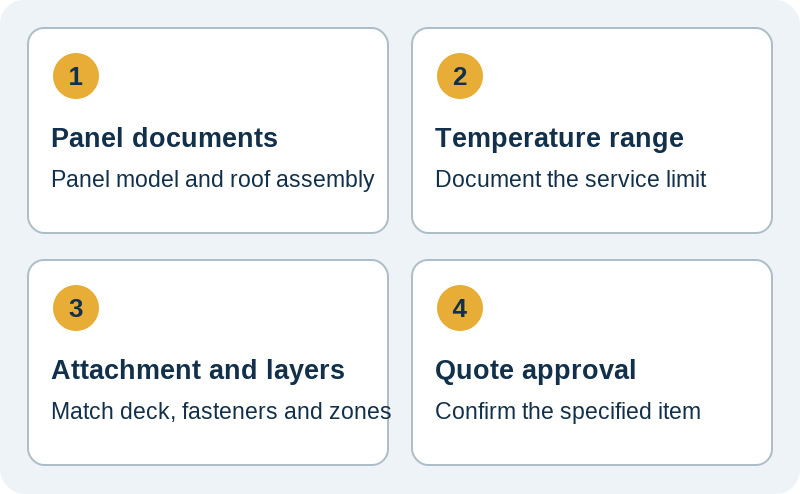
1. Identify the roof covering, not just “metal”
Ask for the panel manufacturer, product line, and profile. For a standing seam roof, ask for the exact panel designation on the job documents. The manufacturer’s installation document should identify the required underlayment, slip sheet or separation layer (if any), and fastening or attachment method. Do not infer those details from another metal roof.
Some metal-panel assemblies have specific material and attachment requirements tied to the panel system or warranty. Record the document title and revision supplied by the buyer; do not rely on an old job note or a verbal description. NRCA: updated metal-roofing best practices
2. Confirm the temperature requirement in writing
Ask whether the panel manufacturer specifies a high-temperature underlayment and what conditions apply. “High temp” is not a universal grade by itself: the required test basis, exposure, and compatible roofing assembly must come from the current product documentation. A supplier should not translate a general category into a performance guarantee.
3. Match the attachment method and substrate
Confirm the deck type and the permitted fasteners, spacing, adhesives, or self-adhered zones. Ask whether the underlayment is intended for the full field, a specific transition, or a designated roof area. Check overlap and exposure requirements in the instructions for the exact products being used.
RIDGELOCK’s current public synthetic-underlayment page describes its listed product and published order details, but it does not list metal roof assembly approvals. Buyers should request the current technical sheet and written compatibility documentation for the exact panel system and intended use before ordering. View RIDGELOCK synthetic underlayment
4. Separate field underlayment from water-barrier zones
The primary underlayment and a self-adhered ice-and-water membrane can serve different roles in an assembly. Ask the roofer or specifier which locations require a membrane, how far it extends, and what the applicable code and cladding instructions say. Do not assume that a roll of field underlayment replaces a specified membrane at eaves, valleys, or penetrations.
5. Tie the quote to a written bill of materials
Before placing a wholesale order, reconcile the selected product and revision against the job documents. A useful RFQ includes:
- Panel maker, product line, profile, and roof-covering material
- Roof deck material and slope, if the project documents specify it
- Required underlayment type and temperature classification
- Attachment method, fastener schedule, and any separation layer
- Membrane locations and transition details
- Required technical documents, test reports, and approvals for the assembly
- Roll dimensions, gross coverage, packaging, and pallet quantity to quote
- Ship-to ZIP code, requested quantity, and date needed
Keep product requirements and commercial terms in separate fields. Confirm current packaging and availability for the requested item rather than carrying assumptions from a previous order. The spec-sheet checklist can help structure that request; contact RIDGELOCK with the product and job documents if you need a document check.
A short RFQ you can copy
“Please confirm whether [exact underlayment item] is documented for [panel maker/product/profile] on [deck type]. We need the current temperature rating, attachment instructions, required separation layer, permitted exposure, and any assembly-specific approvals. Please quote [roll count] to [ZIP code] for delivery by [date]. Do not substitute without written approval.”
That wording makes the technical question explicit and keeps a commercial quote from being mistaken for an installation approval.
Sources and scope
This is a purchasing checklist, not a roof design or installation specification. Follow local code and the current written instructions from the roofing-panel and underlayment manufacturers. NRCA guidance cited here addresses general metal-roofing considerations; it does not certify RIDGELOCK products. See RIDGELOCK’s product details and fastening guide for currently published information.